
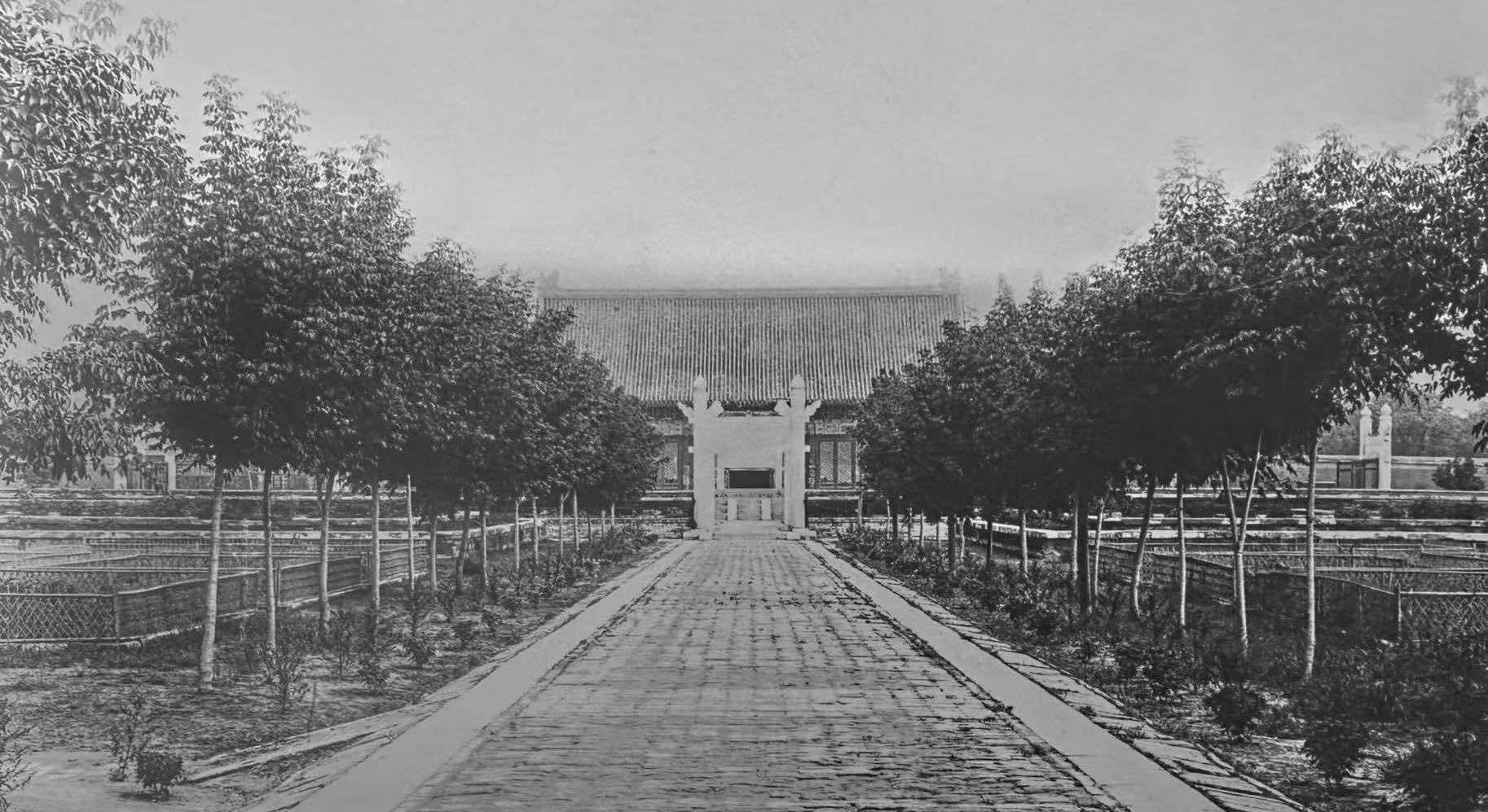
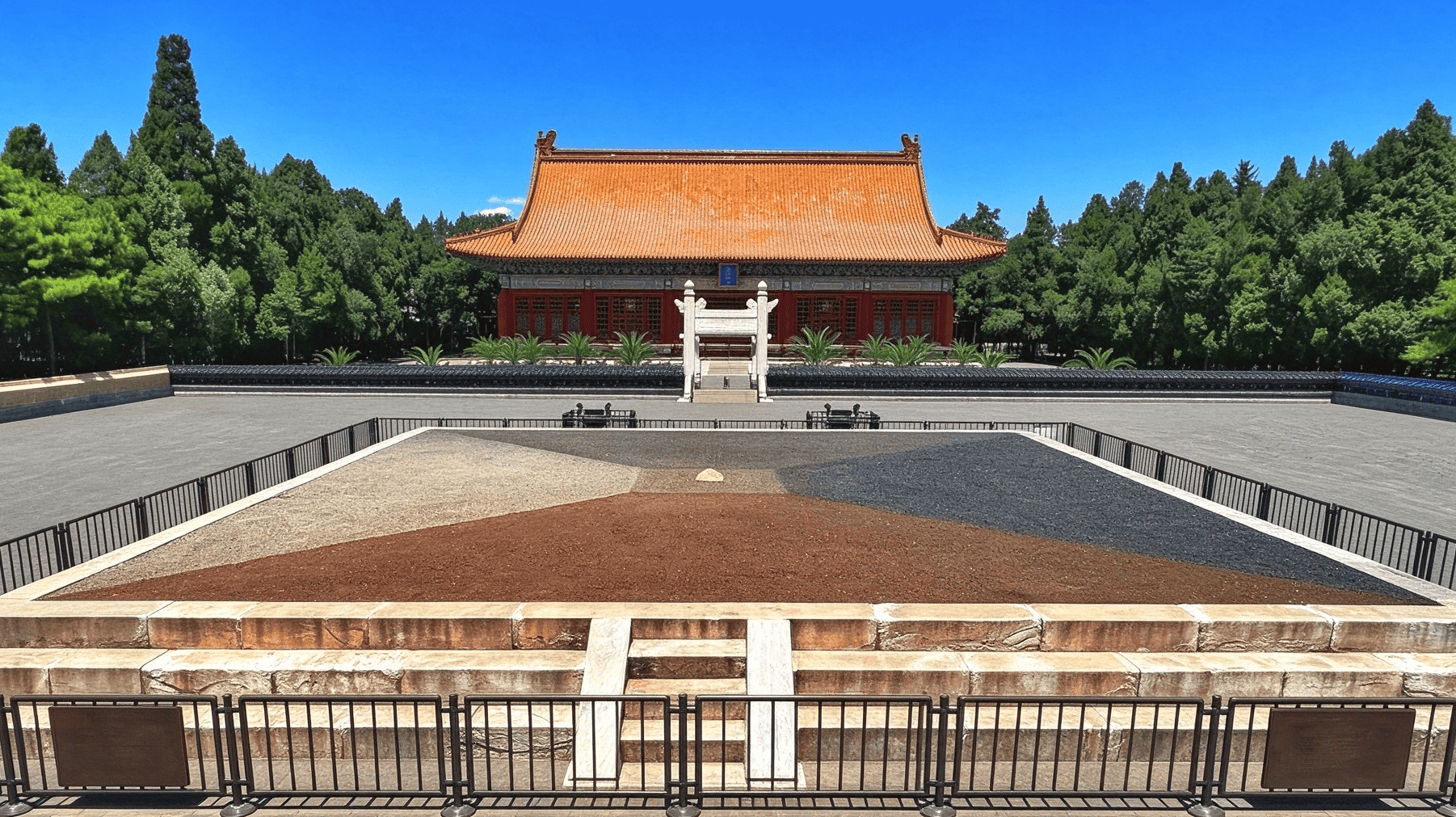
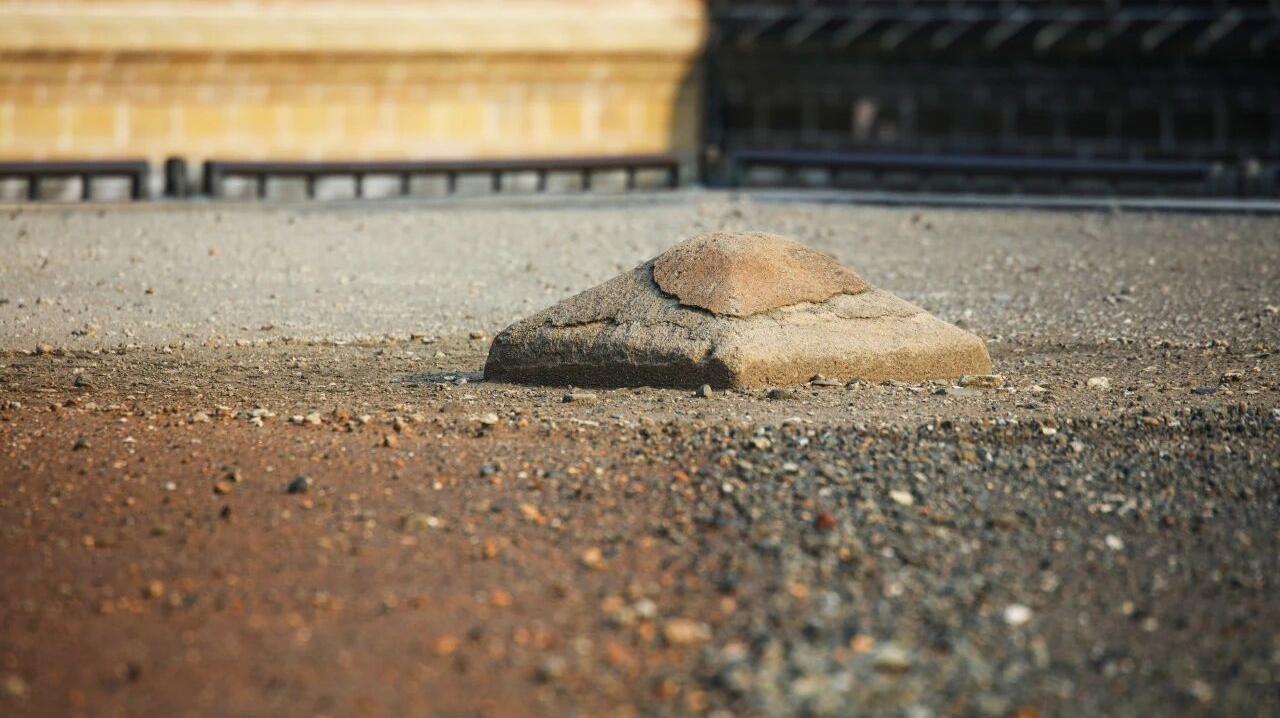
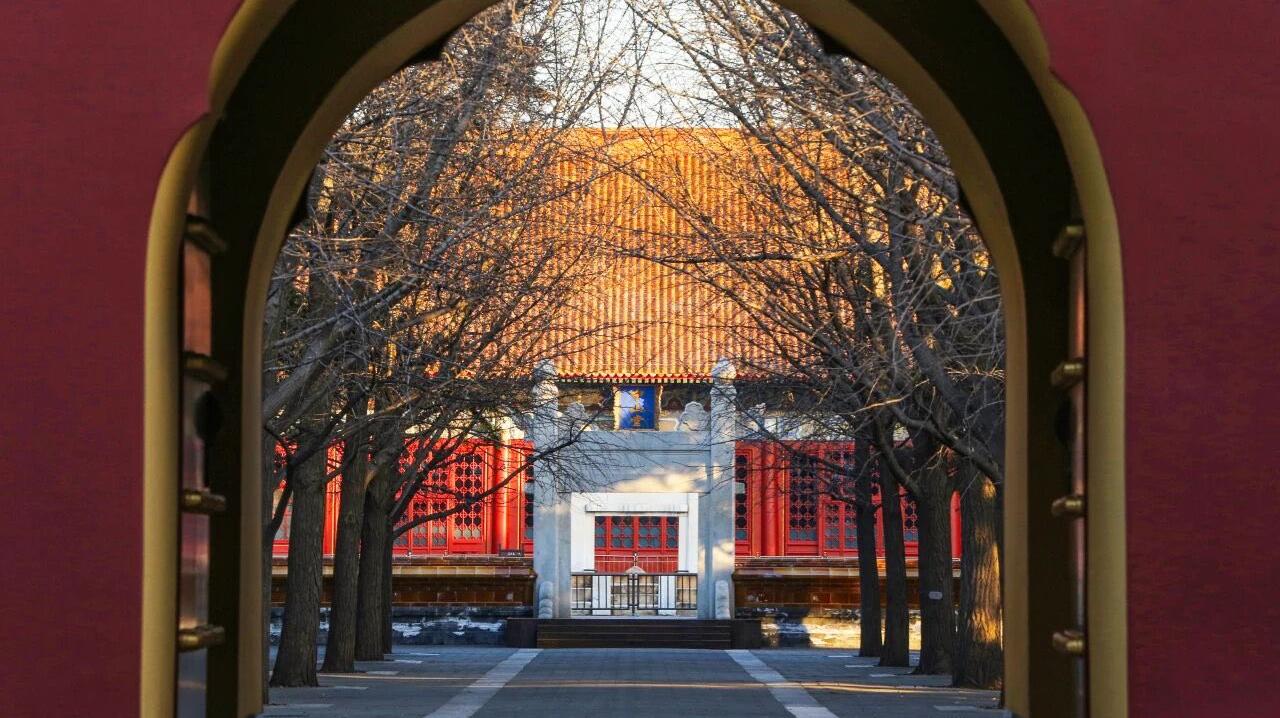
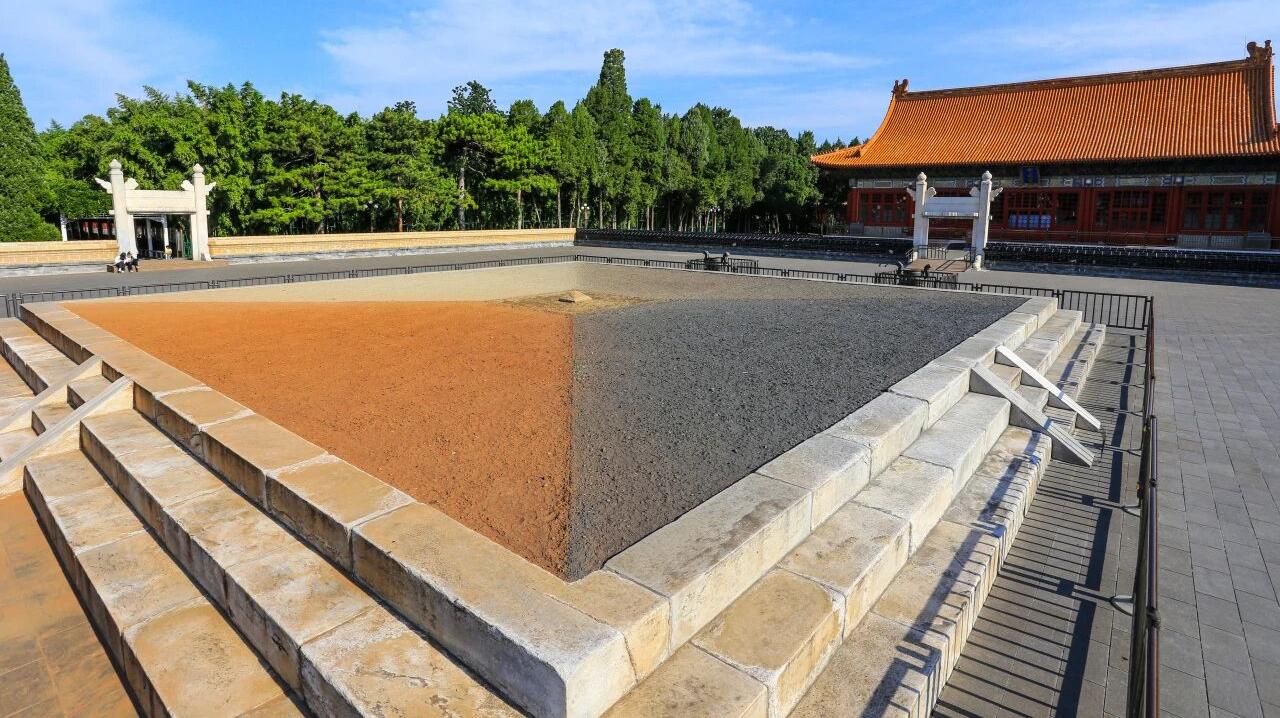
Built in 1420 (the 18th year of the Yongle reign, Ming Dynasty) according to the principle "Imperial Ancestral Temple to the Left, Altar of the Gods of Land and Grain to the Right" (from Rites of Zhou 周礼·考工记), it is China's (still existing) highest-ranking imperial altar for state sacrifices to the Land and Grain deities. The character she 社is for earth, and ji 稷is for grain. The Altar is a three-tiered, 0.96-meter-high square platform made of bluish-white stone. Its top tier is covered with soil in five symbolic colors: green (representing east), red (south), white (west), black (north), and yellow (center), famously known as the Five-colored Earth. The Shezhu Stone, also called the Rivers and Mountains Stone, stands at its center. The Altar is enclosed by walls with glazed bricks in blue, red, white, and black, each side with one Lingxing Gate made of white stones in the middle. Ming and Qing emperors performed annual sacrifices here on the First Wu Day 上戊日 of the second and eighth lunar months, praying for bountiful harvests and national peace.



Park address: No. 4 Zhonghua Road, Dongcheng District, Beijing (west of Tiananmen)
Fax number: 010-66052525
Consultation hotline: 010-66055431, 15600995431
Copyright © 2026 Beijing Zhongshan Park. All Rights Reserved.