
Moon-Patterned Rock
As one of China's famous garden stones and a relic from the Old Summer Palace, it features a crescent-shaped hole. At night, moonlight passing through this hole casts a crescent moon shadow on the ground. It was named huiyue 绘月, meaning moon-drawing, and inscribed by Emperor Qianlong, Qing Dynasty, and was moved to the Park in 1919.
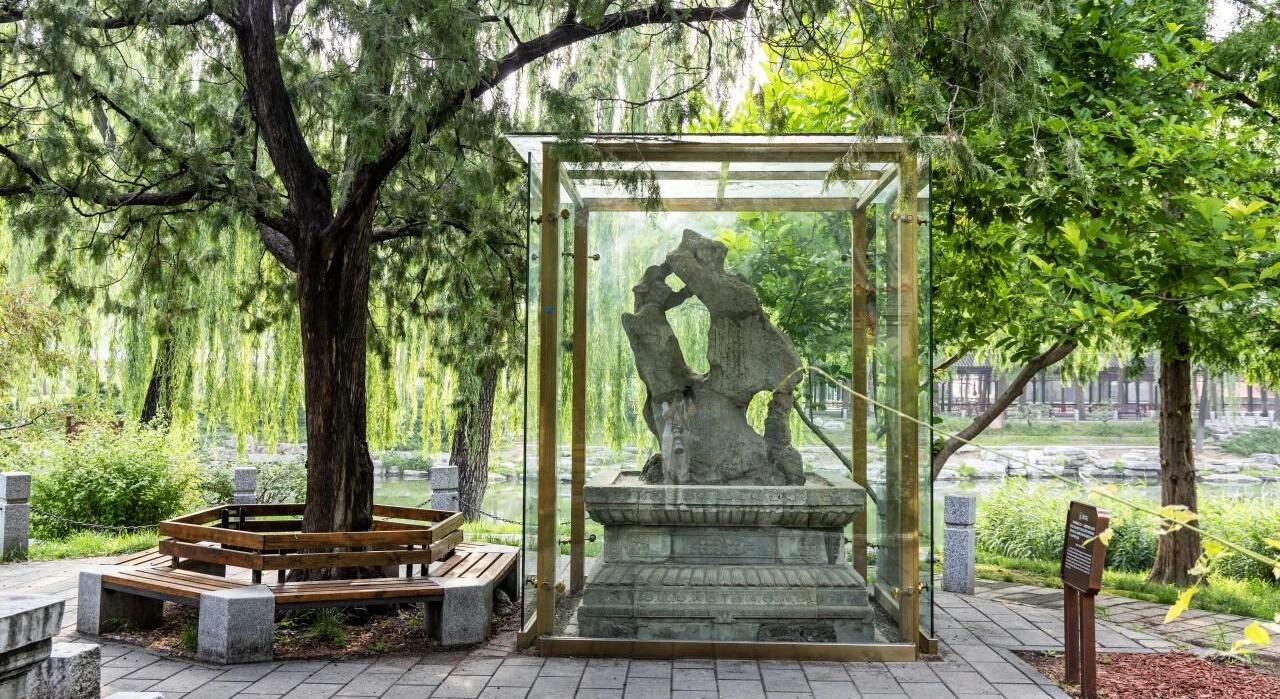
Drag left and right to compare old and new photos
WeChat Official Account

Official Weibo account

Official video account

Official Douyin account
Friend Links:
Park address: No. 4 Zhonghua Road, Dongcheng District, Beijing (west of Tiananmen)
Fax number: 010-66052525
Consultation hotline: 010-66055431, 15600995431
Copyright © 2026 Beijing Zhongshan Park. All Rights Reserved.